Short answer: Dive footage comes out blue and flat because water filters colour as you go down, and red goes first. A GoPro HERO13 Black is waterproof to 10 m on its own with the door locked, which covers swimming and snorkelling. For scuba you need the Protective Housing, which GoPro rates to 60 m. Before every dive, wipe the door seal clean and lock the door, because GoPro says sand or dirt on the seal can let water in. The touchscreen will not work under water, so choose your preset on land and use the buttons below the surface. To keep colour, get within one metre of the subject, keep the sun behind your back and hold each shot for ten seconds. Deeper than about 5 m in blue water, our team finds a red filter on the housing helps. After salt water, rinse the camera in fresh water and dry it with a soft cloth before you open the door.
Oman's sea is one of the best places in the region to dive, and a small action camera is the easiest way to bring it home. This guide covers what to do before you get wet, how to shoot down there, and how to look after the camera afterwards.
Before you get wet
Know your depth
HERO13 Black alone is waterproof to 10 m with the door locked. Scuba needs the Protective Housing, rated to 60 m. GoPro lists the housing for HERO13, HERO12, HERO11 and HERO10 Black.
The door seal comes first
A grain of sand on the door seal is enough to let water in. Wipe the seal with a cloth and lock the door properly before every dive.
“Dirt, sand, or other debris on the seal could cause water to leak into your camera.” — GoPro, HERO13 Black user manual (read 19 November 2026)
Set it up on land
- Choose your preset before you go in: the touchscreen will not work under water. Down there, hold Mode and press Shutter to open the preset menu.
- Charge the battery fully and use a brand-name microSD card rated A2 V30 or higher.
- Do not count on the camera floating. Clip it to a wrist strap and keep your hands free to dive.
- Fog inside the housing comes from humid air. Close it in a dry, air-conditioned room and do not open it on the boat.
Where does the red go?
Water eats colours one by one, and red is the first to go. That is why everything turns blue or green as you go down.
- Fix one: get closer. Every metre of water between you and the fish eats colour.
- Fix two, a tip from our team: a red filter on the housing for blue water once you are deeper than about 5 m. Near the surface take it off.
Settings to start with
This is a starting point from our team, not a GoPro rule. The setting names are from the HERO13 Black manual. Try them on your first dive and adjust.
| Setting | Choose | Why |
|---|---|---|
| Resolution and frame rate | 4K at 60 frames | You can slow the clip to half speed, and movement looks smooth. |
| Lens | Wide | You can get close and still fit the subject. |
| Stabilisation | HyperSmooth On | Takes out hand shake and current. |
| White balance (Pro mode) | Auto | The easy start. If you colour-correct later, try Native. |
| Color (Pro mode) | Natural | Ready to share from your phone with no edit. |
Three moves that change the video
- Get close, then closer. One metre or less from the subject: more colour, less water. But never touch or chase.
- Sun behind your back. Let the light fall on the subject, and shoot around midday when the sun is high.
- Hold for 10 seconds. Two hands on the camera, move slowly, and let every shot run at least ten seconds.
Where to dive in Oman
Five places every diver in Oman knows: the Daymaniyat Islands, Bandar Khayran, Al Fahal Island, Musandam and Mirbat in Dhofar. Depth, visibility and current change daily, so ask your dive centre before the trip.
The Daymaniyat Islands are a nature reserve: get the entry permit from the Environment Authority online before you go. Taking or damaging coral and marine life is prohibited, and so is touching or disturbing nesting turtles or their eggs. The Authority's permit page says entering or camping is prohibited from May to October, so ask your dive centre before you book.
Best time, according to PADI: October to February, with water about 28 °C and visibility about 15 m and up to 25 m.
After the dive
- Rinse the camera and housing in fresh water and dry with a soft cloth.
- Make sure the camera is dry before you open the door.
- Dried sand on the door? Soak the camera in warm tap water for 15 minutes, then rinse well before opening the door.
- Muffled sound? Shake the camera or blow on the mic to clear the water. Never use compressed air.
Your safety first, the shot second. Watch your air, your depth and your buddy before the camera. No shot is worth it.
What to take
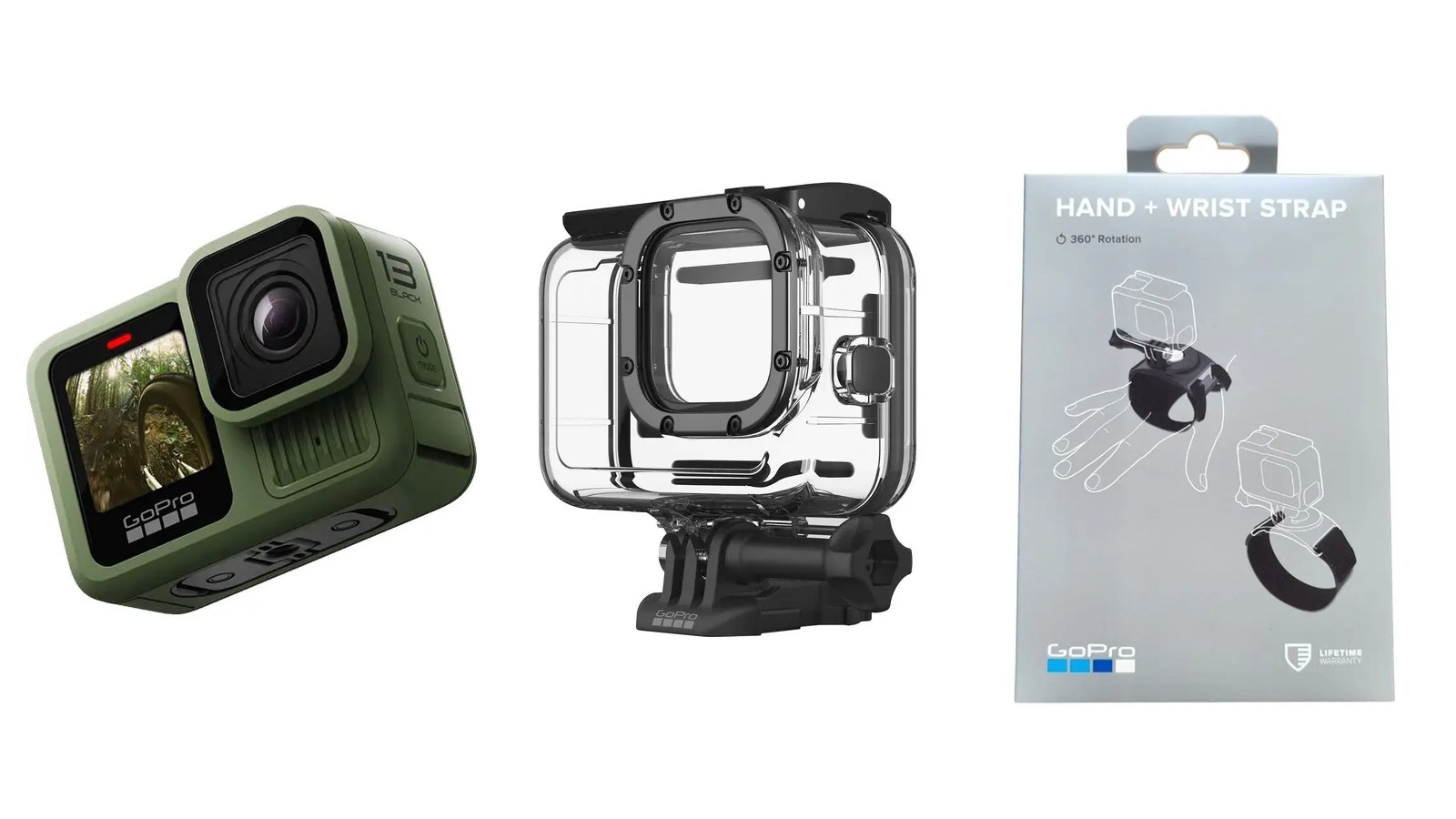
- GoPro HERO 13 Black Limited Edition (Forest Green) CHDHX-133-RW
- GoPro Protective Housing for Hero 13,12,11,10 & 9 Black ADDIV-001
- GoPro Hand + Wrist Strap 360° Rotation AHWBM-002
Frequently asked questions
How deep can a GoPro HERO13 Black go without a housing?
GoPro's manual says the HERO13 Black is waterproof to 10 m (33 ft) with the door locked. That covers swimming and snorkelling. It is not waterproof with the door open or removed.
Do I need the Protective Housing for scuba diving?
Yes, for anything deeper than 10 m. GoPro rates the Protective Housing to 60 m (196 ft) and lists it for HERO13, HERO12, HERO11 and HERO10 Black.
Why is my underwater video blue or green?
Water filters colour as you go down, and red is the first to go. Get closer to the subject, keep the sun behind you, and, as a tip from our team, deeper than about 5 m in blue water use a red filter on the housing.
Does the GoPro touchscreen work under water?
No. GoPro's manual says the touchscreen will not work under water, and you use the camera's buttons instead: hold Mode and press Shutter to open the preset menu. Choose your preset before you go in.
What should I do with the camera after a dive in salt water?
Rinse it with fresh water and dry it with a soft cloth, then open the door. If sand has hardened around the door, soak the camera in warm tap water for 15 minutes and rinse well.
Do I need a permit to dive at the Daymaniyat Islands?
Yes. The Daymaniyat Islands are a nature reserve and the Environment Authority issues the entry permit online. Taking or damaging coral and marine life is prohibited, and so is touching or disturbing nesting turtles or their eggs. The Authority's permit page says entering or camping is prohibited from May to October, so ask your dive centre before you book.
When is the best time to dive in Oman?
PADI gives October to February as the best time: water about 28 °C, visibility about 15 m and up to 25 m, with whale sharks most likely in those months.
Sources
- GoPro: product manuals (HERO13 Black user manual)
- Environment Authority: entry permit to the Daymaniyat Islands Nature Reserve
- NOAA Ocean Exploration: why red disappears with depth
- PADI Travel: diving in Oman
Last updated: 19 November 2026.