Photographing your patients' cases on a phone, and the picture never looks like what you see in the chair?
Dental photography doesn't need an expensive camera. It needs three right pieces: a camera, a macro lens and a flash made for close-up work.
Last updated: 10 October 2026
The camera: will any modern camera do?
Almost. Dental photography uses only a few camera features, so the brand matters less than you'd think. A mirrorless body is lighter in the hand, which helps when you shoot many cases a day.
Sources:
Why a 100mm macro lens?
A 1:1 macro lens records a tooth at its true size. The 100mm focal length keeps you at a comfortable distance from the patient and avoids distorting the shape of the teeth. 60mm and 85mm lenses are used too, but 100mm is the one most recommended for dental work.
Related products
- Sony FE 100mm F2.8 Macro GM OSS
- Sony FE 90mm F2.8 Macro G OSS
- Nikon NIKKOR Z MC 105mm f/2.8 VR S
- Sigma 105mm F2.8 DG DN Macro Art (Sony E)
- TTArtisan 100mm F2.8 Macro (Sony E)
- Canon RF 100mm F2.8L Macro IS USM
Sources:
Twin flash or ring flash?
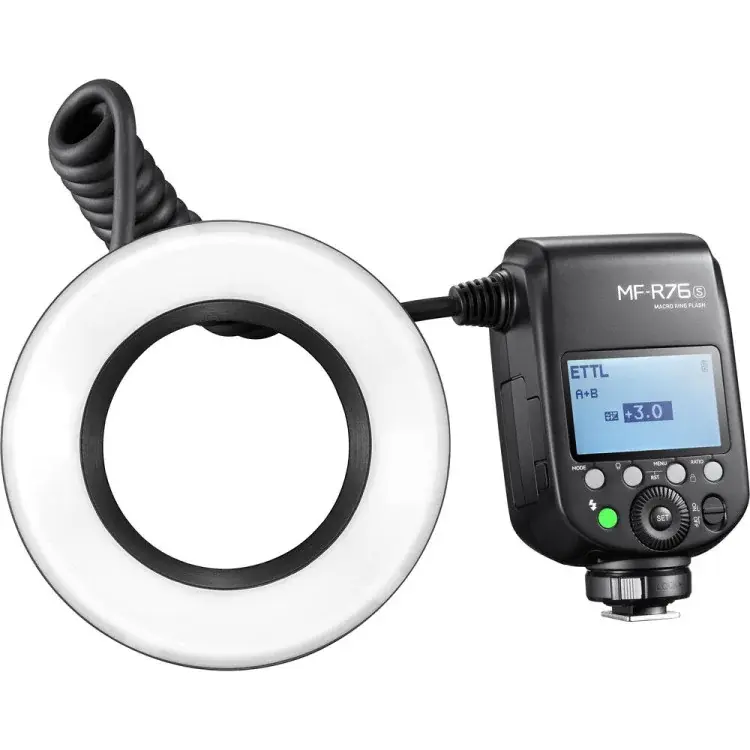
A ring flash gives even light with almost no shadow. It's the easiest to start with and is often used for back teeth, but the light can look harsh.
A twin flash puts two heads at the sides of the lens, so a soft shadow stays and shows the tooth's texture and shape. Many dentists prefer it for front teeth.
If there are shiny fillings or crowns, a diffuser takes the glare down.
Related products
Sources:
The clinic tools that complete the picture
- Cheek retractors: hold the lips and cheeks back so the light and the lens can reach the teeth.
- Intraoral mirrors: show chewing surfaces and hidden areas. Warm the mirror first so it doesn't fog.
- Contrasters (black backgrounds): remove everything behind the tooth and show its edge and translucency.
- Cross-polarising filter with a grey card: cuts the shine, so the tooth's colour reads truer when you match the shade.
Your dental supplier carries these.
Sources:
Settings to start with
Start in manual (M): ISO 100, aperture f/8 to f/11, white balance set to flash. Then adjust the flash power until the picture matches what you see.
Sources:
Frequently asked questions
What's the best lens for dental photography?
A 100mm macro lens with 1:1 magnification is the most recommended: it records the tooth at true size and keeps you at a comfortable distance from the patient.
Ring flash or twin flash?
A ring flash is easier and gives even light; a twin flash shows the tooth's texture and shape better, especially for front teeth.
What settings should I start with?
Manual mode, ISO 100, f/8 to f/11, white balance on flash, then adjust the flash power.
Not sure which kit suits your clinic? Message us on WhatsApp and someone from our team will get back to you.